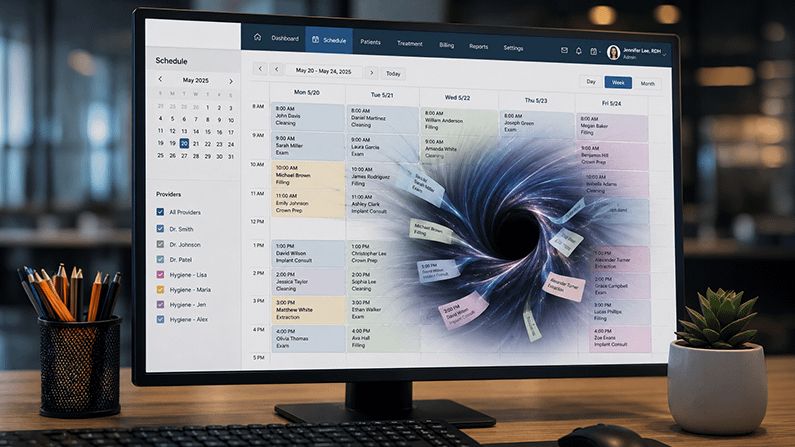
A hole in tomorrow’s schedule is one of the most expensive things in a dental practice, and one of the easiest to underestimate. When a patient cancels at the last minute, that chair time doesn’t just sit empty — it represents production that’s gone forever, overhead that still has to be paid, and a team standing around during hours you’re funding regardless. An hour of open chair time can’t be recovered later; it’s simply lost.
Most practices treat last-minute cancellations as bad luck to be endured. The practices that keep their schedules full treat them as a systems problem to be managed. The difference isn’t that they have more reliable patients — it’s that they’ve built the habits that fill openings fast and, more importantly, reduce how often those openings appear in the first place. This guide covers both: how to fill a gap when it happens, and how to prevent most of them from happening at all.
Why an Empty Chair Is So Costly
The cost of a cancellation is easy to wave off because nothing visibly “happens” — but that’s exactly what makes it dangerous. The production that would have occurred in that slot is gone, while every fixed cost of running the practice during that hour continues: rent, salaries, equipment, the lights. You pay full price for the time whether or not it produces.
Stack a few of those up across a week and the number gets serious quickly. A practice that averages even a handful of unfilled last-minute openings a week is quietly losing a meaningful slice of its annual production capacity — production it had the demand and the capability to deliver, simply lost to gaps no one filled. Seeing cancellations in those terms is what motivates building a real system to address them, rather than shrugging them off as unavoidable. (See how block scheduling protects your production.)
Build a Fast-Fill System
When a cancellation happens, speed is everything, and speed comes from being ready in advance rather than scrambling in the moment. The practices that fill openings fastest have prepared for the gap before it appears: they maintain a ready list of patients who want to come in sooner, and a clear process for reaching them the instant a slot opens.
The essential move is to have this infrastructure built ahead of time so that filling a gap is a quick, known routine rather than an improvised panic. When a slot opens, the team already knows who to contact and how, and can work down a prepared list efficiently. A fast-fill system turns a two-hour hole into a thirty-minute inconvenience — but only if the pieces were assembled before the phone rang with the cancellation.
Keep a Ready-to-Come-In List
The single most useful tool for filling openings is a maintained list of patients who would happily come in earlier than their scheduled appointment — people with a pending treatment need, patients who asked to be seen sooner, or those who simply prefer an earlier slot. When a cancellation hits, this list is the first place the team turns.
The key word is maintained. A ready list is only valuable if it’s kept current and actually used, which makes it a small ongoing discipline rather than a one-time setup. Practices that keep this list fresh can often fill an opening with a single call or two, turning what would have been dead time into productive, already-needed care. It’s one of the highest-return habits a front desk can build, and it costs nothing but attention.
Prevent the Cancellations You Can
Filling gaps is reactive; the bigger win is reducing how often they occur. A significant share of last-minute cancellations trace back to weak or generic confirmation habits and, underneath that, to how connected the patient feels to the appointment and the practice. Patients cancel more easily on an office they feel like a number at than on one where they feel known and expected.
This is why prevention starts well before the reminder text. It begins with the relationship and the experience — a patient who feels genuinely cared for, who understands why their appointment matters, and who has a real connection to the team is far less likely to treat the appointment as disposable. Confirmation systems help, but they work best on a foundation of patients who actually value being there. Reducing cancellations, in other words, is partly a patient-experience project, not just a reminder-cadence one. (See building a patient communication system.)
Strengthen Confirmations Without Being Annoying
Confirmation systems reduce no-shows and cancellations, but only when they’re done thoughtfully. A barrage of impersonal reminders trains patients to tune them out; a well-designed confirmation touch reminds the patient of a commitment to a practice they value. The difference is tone and intention, not just frequency — the goal is to reinforce the relationship, not to nag.
The most effective confirmations feel like a practice that’s expecting the patient and looking forward to seeing them, rather than an automated system covering itself. When a reminder carries a bit of that human, we’ve-got-you-scheduled warmth, it strengthens the patient’s intention to show rather than just checking a box. Design the confirmation experience with the patient relationship in mind, and it does double duty: fewer gaps and a better impression.
Have a Policy — and Use It Consistently
A clear, fairly applied cancellation policy sets expectations and gently discourages casual last-minute cancellations, but its value depends entirely on consistency. A policy that exists on paper and is never applied teaches patients it doesn’t matter; a policy applied unevenly feels arbitrary and can damage relationships. Applied calmly and consistently, it signals that the practice’s time is valued.
The point of a policy isn’t to punish patients — it’s to communicate that appointments are real commitments and that the practice runs on respect for everyone’s time. When patients understand there’s a reasonable, evenly enforced expectation, most rise to it. The consistency is what makes it work: it’s a standard, and standards only shape behavior when they’re actually upheld.
Common Mistakes That Keep Chairs Empty
- Scrambling only after a gap appears. Without a prepared list and process, every cancellation becomes a fresh panic that often ends in lost time.
- Letting the ready list go stale. A list that isn’t maintained or used is no help when the opening actually happens.
- Relying only on reminders while ignoring the relationship. Confirmations help, but patients who don’t feel connected cancel regardless.
- Having a cancellation policy but not enforcing it. Inconsistent application teaches patients the policy is optional.
Make It a Front-Desk Standard
Filling and preventing cancellations isn’t a talent some front desks happen to have — it’s a set of systems any practice can build: a prepared fast-fill process, a maintained ready list, thoughtful confirmations, and a consistently applied policy. Assign ownership of these habits so they’re actually run day to day, rather than living as good intentions that fade under a busy schedule.
Like every dependable outcome in a practice, a full schedule is the product of process, not luck. The offices that rarely have empty chairs aren’t blessed with more reliable patients — they’ve simply decided that protecting the schedule is a job worth systematizing, and they’ve built the habits to back it up. (See how the daily huddle keeps the schedule full.)
Frequently Asked Questions
How quickly do I need to fill a last-minute opening?
As fast as possible — which is why preparation matters more than reaction. With a maintained ready list and a known process, teams can often fill a slot with a call or two. Without them, the same gap turns into a scramble that frequently ends in lost time.
What’s the best way to reduce cancellations in the first place?
Combine thoughtful confirmations with a strong patient relationship. Reminders help, but patients who feel genuinely cared for and understand why their appointment matters cancel far less. Prevention is part communication system and part patient experience.
Should I charge a fee for last-minute cancellations?
A clear, fairly and consistently applied policy can help set expectations, but its value is in the consistency, not the penalty. The goal is to communicate that appointments are real commitments — applied calmly and evenly, most patients respond well.
Who should own the fast-fill system?
A specific front-desk role responsible for maintaining the ready list and running the fill process. Leaving it to “whoever notices the gap” is how openings go unfilled. Clear ownership turns it into a dependable habit.
Protect Every Hour of Chair Time
Empty chairs are lost production you can’t get back, but most of that loss is preventable. Build a fast-fill system, keep a living ready list, strengthen the relationship behind every confirmation, and apply a fair policy consistently — and you’ll turn one of the practice’s most frustrating leaks into a managed, minor event. Full schedules aren’t luck; they’re a system worth building.
Take the Free 5-Star Challenge
Filling openings starts with a front desk that converts every call into a booked visit. See how well yours is doing that with a free, scored evaluation.
Take the Free 5-Star ChallengeAccelerate Your Practice Growth